CAD
CAD
 USD
USD
 EUR
EUR


Cracker Barrel rolled out its redesigned logo on August 19, 2025. Complaints started within hours, a typography decision most people would normally scroll past became a week of front-page headlines, and by August 26 the company reversed course and went back to the old branding.
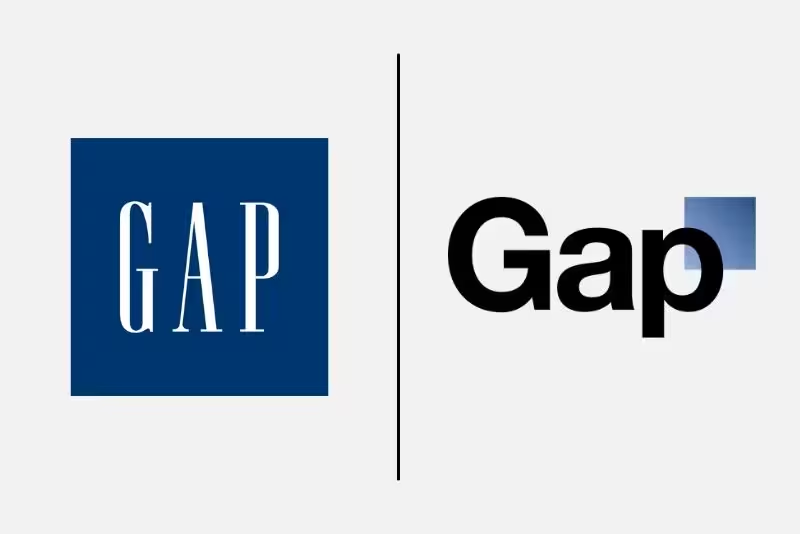
We've seen plenty of logo redesigns go sideways Gap's 2010 rebrand disaster is a classic example) but it's rare for a company to fold this completely, this fast. So what actually happened? What changed, why did it enrage so many people, and what's the real lesson here for brands?
What changed: the old logo vs the new
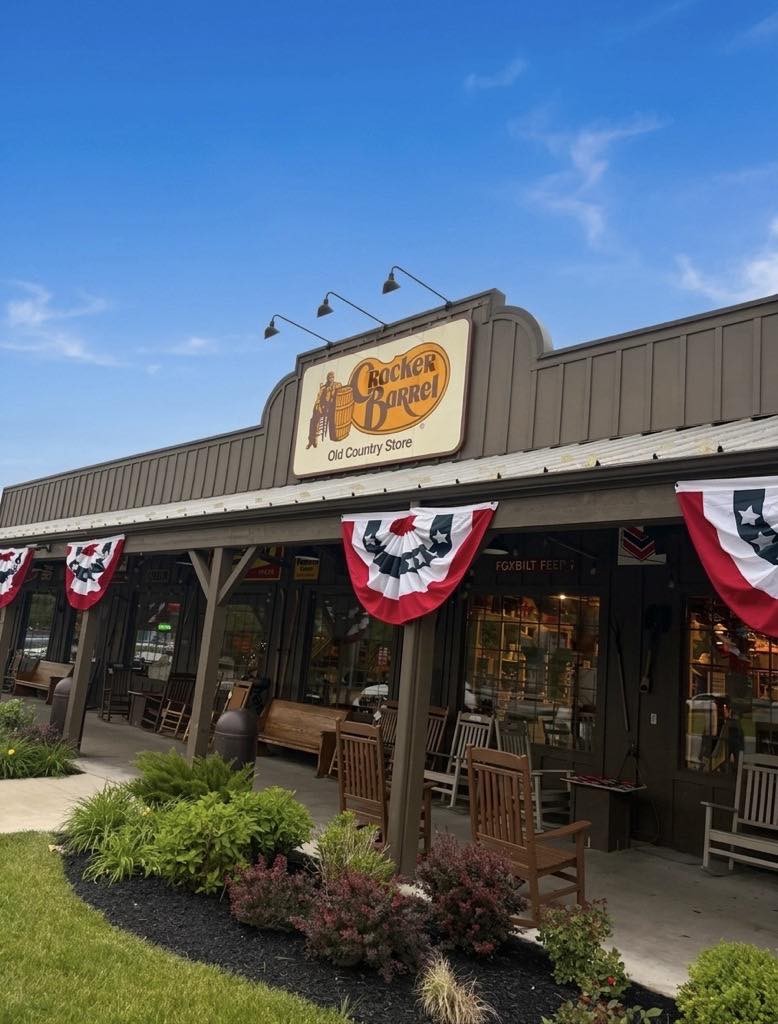
The original Cracker Barrel logo had been around for decades (since 1977, to be precise). It featured a silhouette of a man in overalls commonly known as "Uncle Herschel," after founder Dan Evins' real-life uncle (though the company says the figure represents a generic country-store archetype) leaning against a wooden barrel. Below him: "Old Country Store" in warm, rounded lettering. It felt very unhurried, familiar, distinctly Southern, clearly not trying to be anything it wasn't.
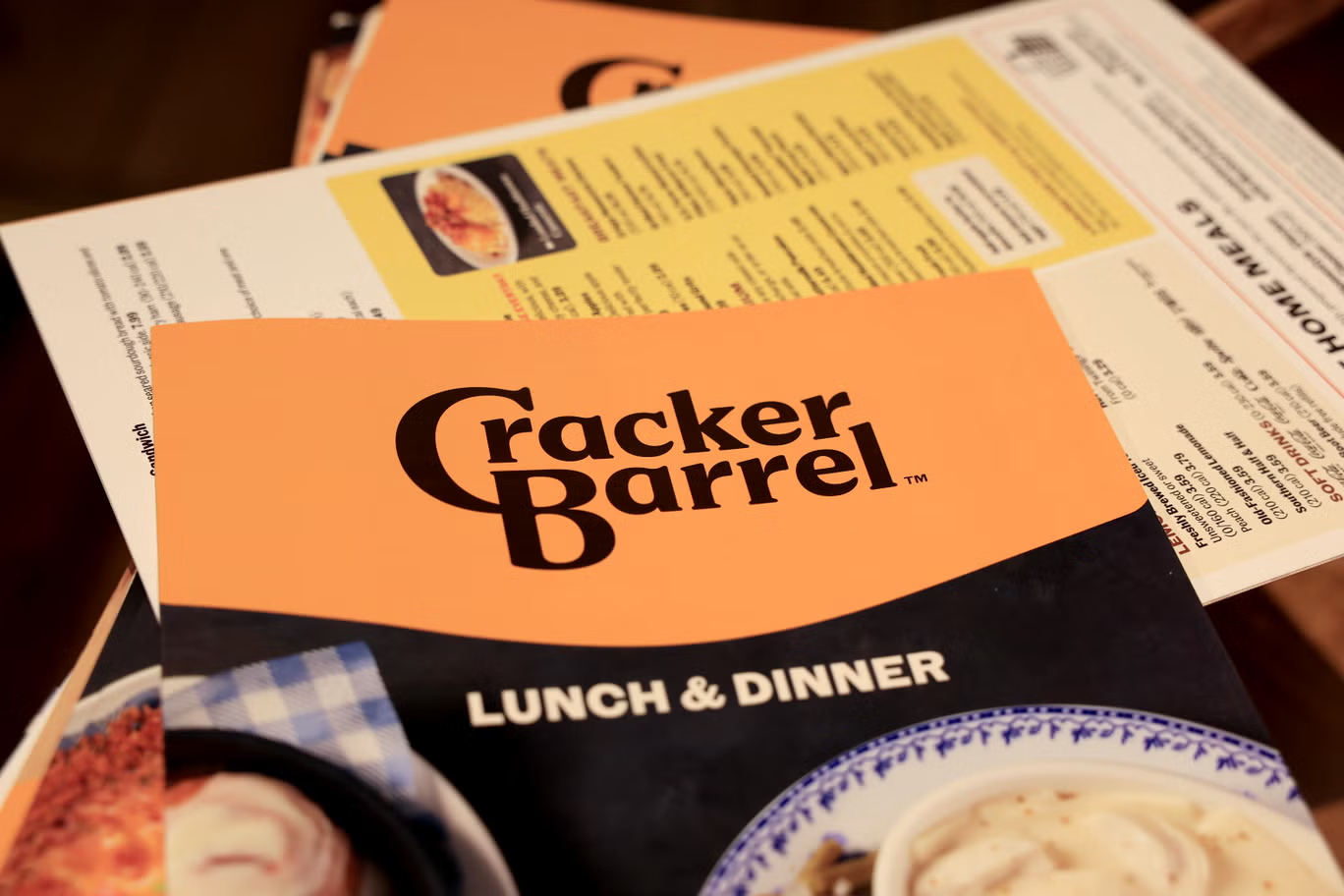
The new logo ditched almost all of that. The man and the barrel were gone. "Old Country Store" was gone. Only the words "Cracker Barrel" remained, set against a gold background, with an updated font and a cleaner, more modern shape. If you didn't know the original, you might have called it tasteful.
The company framed the update as part of a broader "All the More" rebrand, which also included plans to remodel its 660+ restaurants and country stores.
Here's what Cracker Barrel said about the thinking behind the new mark: "Rather than just showing one person, we wanted to feature lots of people. The idea was to celebrate the diversity of all our guests with a logo that represented our continued passion for pleasing people of all races, colors, and genders."
Why a company touches a logo this well-known
Before piling on, it's worth asking why any brand would change a logo people recognize that clearly.
First, there's the screen problem. The different directions a logo can take have been shaped heavily by the digital era. Detailed, illustrated marks that looked great on roadside signage and store-window vinyl often don't translate to a 40px app icon or a mobile browser tab.
Simplifying a mark so it works at tiny sizes is one of the most sensible things a brand can do, and it's exactly what drove the wave of "flat logo" redesigns that swept through big brands in the 2010s.
Second, there's audience growth. Cracker Barrel has been trying to attract younger, more diverse guests for years. Its older customer base, while fiercely loyal, is by definition aging. A logo that felt modern and inclusive in 1970 might not read that way to a millennial family scrolling through Google Maps looking for a Sunday lunch option.
Third, there's competitive pressure. When every other chain in your category is refreshing, updating, and looking newer, it's very tempting to want to keep up.
So on paper, the Cracker Barrel rebrand made sense. on paper, the Cracker Barrel rebrand made sense. The minimalist design trend that has pushed brands toward cleaner wordmarks and stripped-back marks has been one of the biggest evolutions in visual identity over the past decade. Airbnb did it. Google did it. Pepsi did it. The instinct isn't wrong, but the problem was the execution, and, more fundamentally, the timing.
 |  |
 |  |
Why people hated it
The reaction to the new logo was brutal. Within hours, "generic," "soulless," and "bland" were doing the rounds on social media. The company's stock dropped by almost $100 million in a single day. Donald Trump posted on Truth Social calling on Cracker Barrel to revert. By the time a week had passed, a senior White House aide was publicly claiming he'd spoken to Cracker Barrel executives by phone.
The new logo wasn't badly designed. That was never the issue. It was clean, legible, and modern. By the cold logic of a branding brief, it probably ticked all the boxes. The problem was something else entirely, and it gets to the heart of what a brand identity actually is.
A logo isn't a graphic. It's a container for everything a brand has meant to people over decades of interaction. Every breakfast eaten at a Cracker Barrel on a road trip, every peg game waiting on every table, every rocking chair on every porch… All of that accumulated experience had a symbol attached to it. The moment you change the symbol, you crack open the question of whether the thing it represents is still there.
Cracker Barrel's core customer didn't look at the new logo and think "that's a bad font choice." They looked at it and thought: "This no longer looks like mine." The old-timer with the barrel was so much more than just a visual. Strip him out, and you've instantly removed the symbol of everything the brand has ever stood for.
Franchise consultant and branding expert Nick Yeonakis put it neatly to CBS News: the original logo was "a throwback to a simpler time that was about home cooking," and that stability was exactly why it mattered. "People have this image in their mind of a Cracker Barrel that is constant and stable, and that's why when they rebranded, backlash happened."
There's also a broader cultural dimension here. For Cracker Barrel's core demographic, the old logo was almost tribal. It signaled something about who they were and what they valued. When the company removed it while simultaneously announcing plans to "celebrate diversity," a significant chunk of its customer base probably felt very alienated. Whether that reading was fair or not is a separate conversation. The fact that it happened is a branding lesson you don't want to learn the hard way.
It wasn't just a logo. The restaurants were changing too
The logo change made the headlines, but there was more to it than that. As part of the "All the More" rebrand, Cracker Barrel had also begun remodeling its restaurants and country stores, changing the look and feel of the physical spaces that millions of its most loyal customers had been visiting for years.
When a familiar physical environment changes, whether it's the lighting, the layout, or the shelving, it creates what designers call cognitive dissonance. Your brain expects one experience and gets another. For a brand built almost entirely on physical ritual (the drive in, the porch rockers, the gift shop shuffle, the biscuits), that disruption cuts deeper than any logo change on its own ever would.
The company responded to criticism by reassuring guests that "rocking chairs on the porch, a warm fire in the hearth, peg games on the table, unique treasures in our gift shop, and vintage Americana with antiques pulled straight from our warehouse in Lebanon, Tennessee" weren't going anywhere. But the statement also acknowledged that the remodel plans were underway. On September 9, Cracker Barrel cancelled those plans entirely.
By that point, the company had reversed the logo change, walked back the remodel, and was doing press around its new fall menu. In three weeks, an entire strategic rebrand had been dismantled piece by piece under public pressure.
They're not the first to reverse a rebrand, but few did it this fast
Logo reversals aren't unheard of. What's unusual here is the speed and the completeness of the climb-down.
Gap changed its logo in October 2010 and reverted within six days, which was a record at the time. The new mark was almost universally derided as generic and forgettable (sound familiar?), and the company couldn't get rid of it fast enough. But Gap's crisis was largely about aesthetics. Cracker Barrel's ran deeper, into questions of identity, belonging, and what the brand stood for.
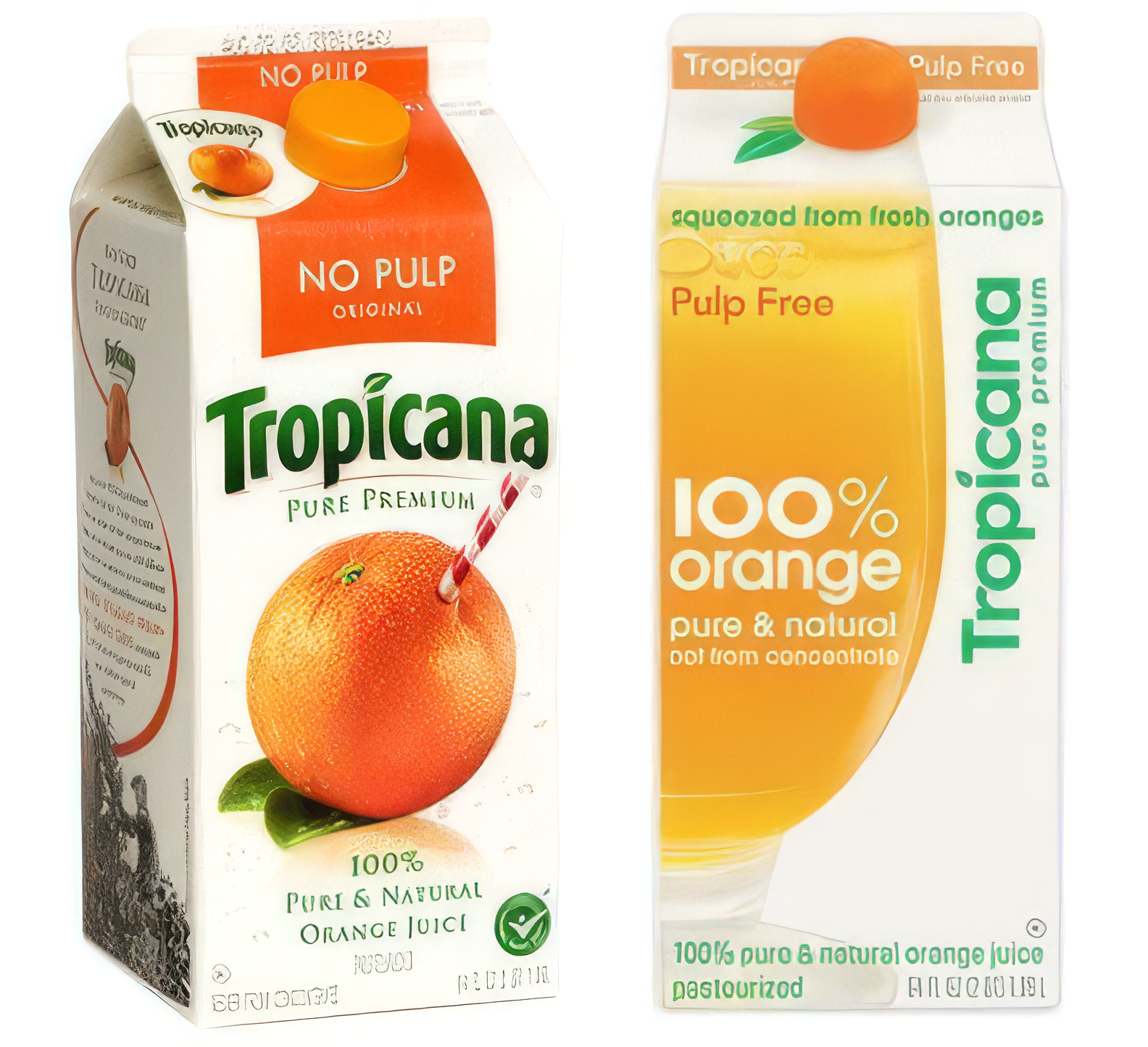
Tropicana is a slower-burn cautionary tale. When PepsiCo redesigned the orange juice brand in 2009 by stripping back the iconic orange-and-straw image for a more modern container, sales dropped 20% in two months and the company lost an estimated $30 million before reverting. Customers said it looked like a generic store brand. The original had 15 years of recognition and shelf presence behind it. The replacement had none.
The pattern is consistent. When you remove the specific, ownable elements of a visual identity in the name of modernization, you often get something that looks good but doesn't say anything. The typeface a brand chooses is the most visible signal of this: the switch up from a warm, weighted serif to a clean sans-serif might seem like a rational update, but it also removes a layer of personality that audiences have built associations around for years.
What every brand can take from this
None of this means brands should freeze and never change. Visual identities need room to evolve. Logos often get digitized, stretched, printed on materials the original designer never imagined. Fonts go out of date. Color palettes that felt cool and contemporary in one era can look tired in the next. Change is often necessary.
What the Cracker Barrel story illustrates is that there's recognition built into a mark, and it's worth cold, hard cash. That recognition is brand equity in its most tangible form. It's what makes your packaging feel like yours, and it's living proof that physical brand touchpoints still matter.
Before a rebrand, ask yourself these three questions:
- What is this logo already carrying for us? What does it stand for? Consider the memories, the rituals, the associations.
- What would we lose if we took away parts of it? Generic is always cleaner, but it's definitely not always better.
- Is the cleaner, newer version good enough to cover that loss? Sometimes it is. Sometimes the gain in screen legibility or modern appeal is worth trading some familiarity.
And when you do change, communicate the why as loudly and as early as possible. Cracker Barrel's initial statement said it wanted to "celebrate the diversity of all our guests", which was a reasonable goal, but poorly timed. Get ahead and tell your audience what you're doing and why before they find out on social media.
Frequently asked questions
As part of a broader "All the More" rebrand announced in August 2025, the company wanted a logomark that worked better on screens and signage and that better reflected its ambition to attract a more diverse customer base. It also came alongside plans to remodel its restaurant chain.
The original logo featured the "Uncle Herschel" silhouette of a man in overalls leaning against a barrel, along with the words "Old Country Store" in warm serif lettering. The new version replaced all of that with a clean wordmark, just "Cracker Barrel" on a gold background, with a simplified font and no illustration.
Yes. After less than a week of public backlash, a drop of nearly $100 million in market value, and a public post from Donald Trump, Cracker Barrel announced on August 26, 2025 that it was returning to its original branding. It subsequently also cancelled its planned store remodels.
The logo carried decades of recognition and emotional association. For many of Cracker Barrel's core customers, the figure of the "Old Timer" was shorthand for a particular kind of familiar, unchanged American hospitality. Removing him felt like erasing something people considered theirs.
That brand equity lives in the specific, ownable elements of a visual identity, a.k.a. the parts that make it unmistakably yours. Strip those out for the sake of a cleaner look and you may gain legibility while losing everything the old mark was carrying. Careful evolution beats starting from scratch, and communicating the why before the launch beats doing damage control after.