CAD
CAD
 USD
USD
 EUR
EUR

Wondering what postcard size to choose? This guide will show you the most common postcard dimensions, why they are popular, and how postcard printing options and custom sizes can help you stand out.
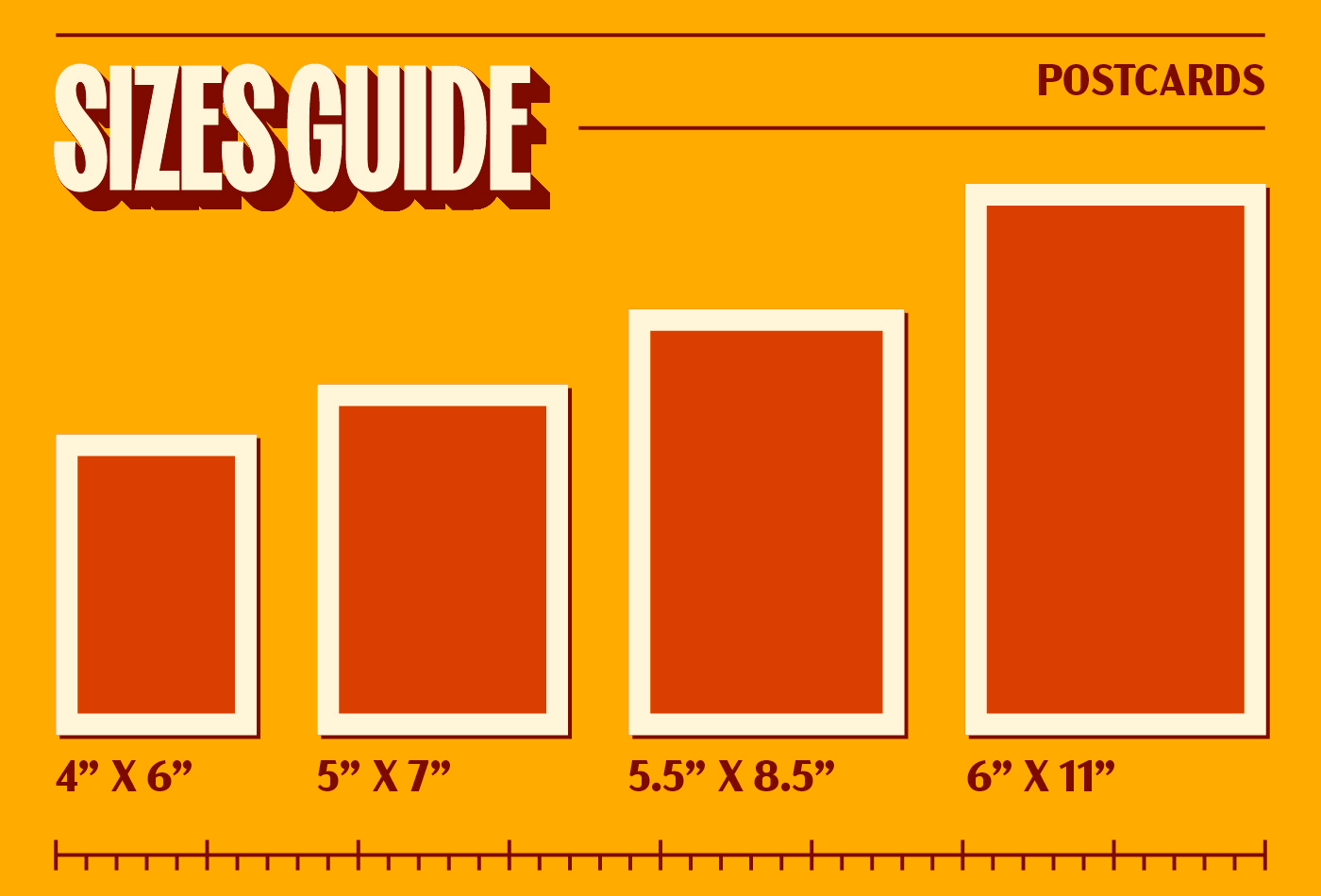
Standard postcard sizes usually fall between 4” x 6” and 5” x 7”, but custom postcards allow you to go beyond these sizes and create something completely unique for your postcard printing needs.
The most popular option is 4” x 6”, because it qualifies for standard postcard postage with both USPS and Canada Post. But 5” x 7”, 8.5” x 5.5”, and 4” x 9” are also popular sizes, especially 4” x 9” rack cards, which are very common.
The larger sizes give you extra space if you need more room for images or messaging, though they may cost a bit more to mail. Custom postcards take this further by letting you choose any size, shape, or format that fits your design and brand.
Choosing the right size comes down to what you’re sending, how much you want to say, and how you plan to mail it. If you want something more eye-catching or tailored, custom postcards give you full flexibility.
What Is A Standard Postcard Size?
A standard postcard size is a commonly used postcard format that’s easy to print, easy to design for, and (most importantly) easy to mail. In most cases, when people say “standard,” they’re talking about postcard sizes that are widely accepted by printers and fit within postal guidelines in the US and Canada.
That said, there isn’t just one single “standard” size.
Why “Standard” Means Different Things?
In printing, standard usually refers to the sizes people order most often: formats like 4” x 6”, 5” x 7”, or 6” x 9”. These sizes work well with popular layouts and are easy to produce.
In mailing, however, “standard” is defined by postal services like USPS and Canada Post. Each sets specific size and thickness rules that determine how your postcard is classified and how much it costs to send. That’s why a postcard that feels “standard” from a design or printing perspective might be treated differently once it hits the mail stream.
Postcard Rate Vs. Letter Rate (And Why It Matters)
- Postcard rate is the most affordable way to mail a postcard. To qualify, your postcard needs to fall within a narrow size and thickness range. In the US and Canada, 4” x 6” is the most popular size that consistently meets these requirements.
- Letter rate applies to postcards that are slightly larger or thicker. Sizes like 5” x 7” or 6” x 9” often fall into this category. They cost a bit more to mail, but they give you more space for visuals and your message.
Neither option is “better”, it really depends on your goals. If you’re mailing in high volume and want to keep costs down, postcard rate sizes are a good choice. It’s worth paying letter rate if you need a more flexible design.
Postcard Size Comparison Chart
| Size | Inches | Millimeters | USPS rate | Canada post rate |
|---|---|---|---|---|
| Industry standard | 4" x 6" | 102 x 152mm | Postcard rate | Postcard/standard lettermail |
| Medium | 5" x 7" | 127 x 178mm | Letter rate | Letter/standard lettermail |
| Large | 6" x 9" | 152 x 229mm | Letter rate | Letter/standard lettermail |
| Jumbo | 6" x 11", 8.5" x 11" or 9" x 12" | 152 x 279mm, 215.9 x 279.4mm, or 228.6 x 304.8mm | Letter rate (max size) | Often non-standard |
| Oversized/Custom | Varies | Varies | Usually letter or non-machinable | Often non-standard |
Most Popular Postcard Sizes (And When To Use Each)
Some postcard sizes are more popular than others (and for good reason). We’ll walk you through these and explain when each one works best so you can pick a size based on your unique situation.
4” x 6” Postcards
This is really the default setting for postcards because it’s the most familiar and easy to design for. It also meets postal requirements for standard postcard postage.
Cost advantages: because it qualifies for postcard-rate postage, 4” x 6” is usually the most affordable option to mail. It’s also an economical price to print, which helps keep production costs down, particularly for large runs.
This size is perfect when you want to get a clear message out quickly:
- Promotions and sales
- Event announcements
- Appointment reminders
- Thank-you or follow-up cards
- Direct mail campaigns where budget matters
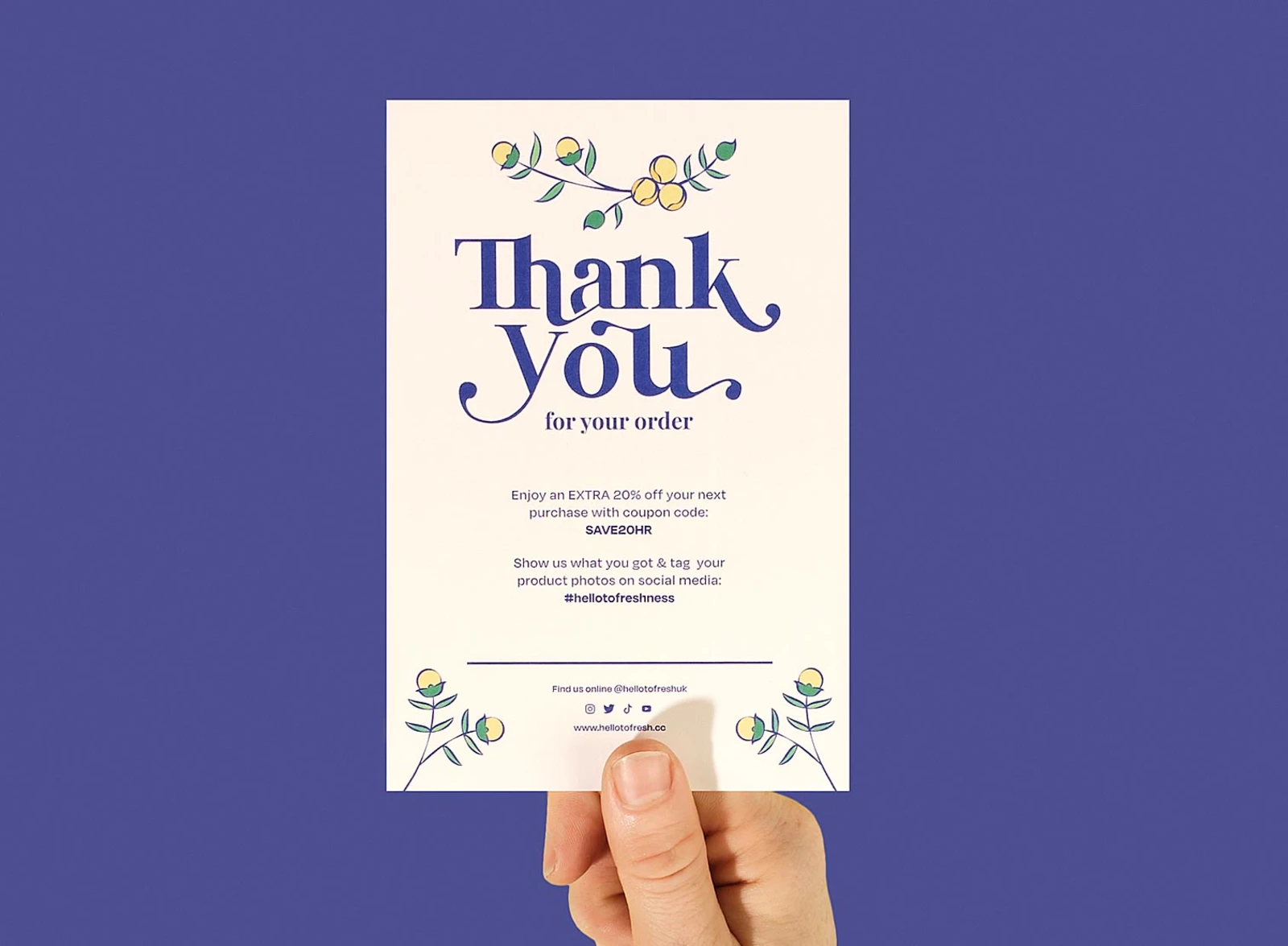
Somertime Designs used thank-you postcards to send as packaging inserts.
5” x 7” Postcards
The 5” x 7” postcard gives you a bit more design flexibility. You get noticeably more room for images, headlines, and breathing space in your layout. The tradeoff is that you usually have to pay letter-rate postage, which costs more than postcard rate.
That extra space, however, means you can add stronger visuals and create a more premium feel.
A 5” x 7” postcard makes most sense when:
- Your design relies heavily on photography or illustration
- You need space for storytelling or multiple messages
- Brand presentation is more important than sending at the lowest possible cost
6” x 9” Postcards (and Larger)
6” x 9” postcards (and larger) are bold. They give you the freedom to go big with oversized images, strong headlines, and clear calls to action. Basically, they’re great if you want to stand out against other, standard-sized postcards in mailboxes.
These larger sized postcards are often used for:
- Retail promotions and product launches
- Luxury and lifestyle brands
- Real estate marketing and open house announcements
- Seasonal or high-impact campaigns
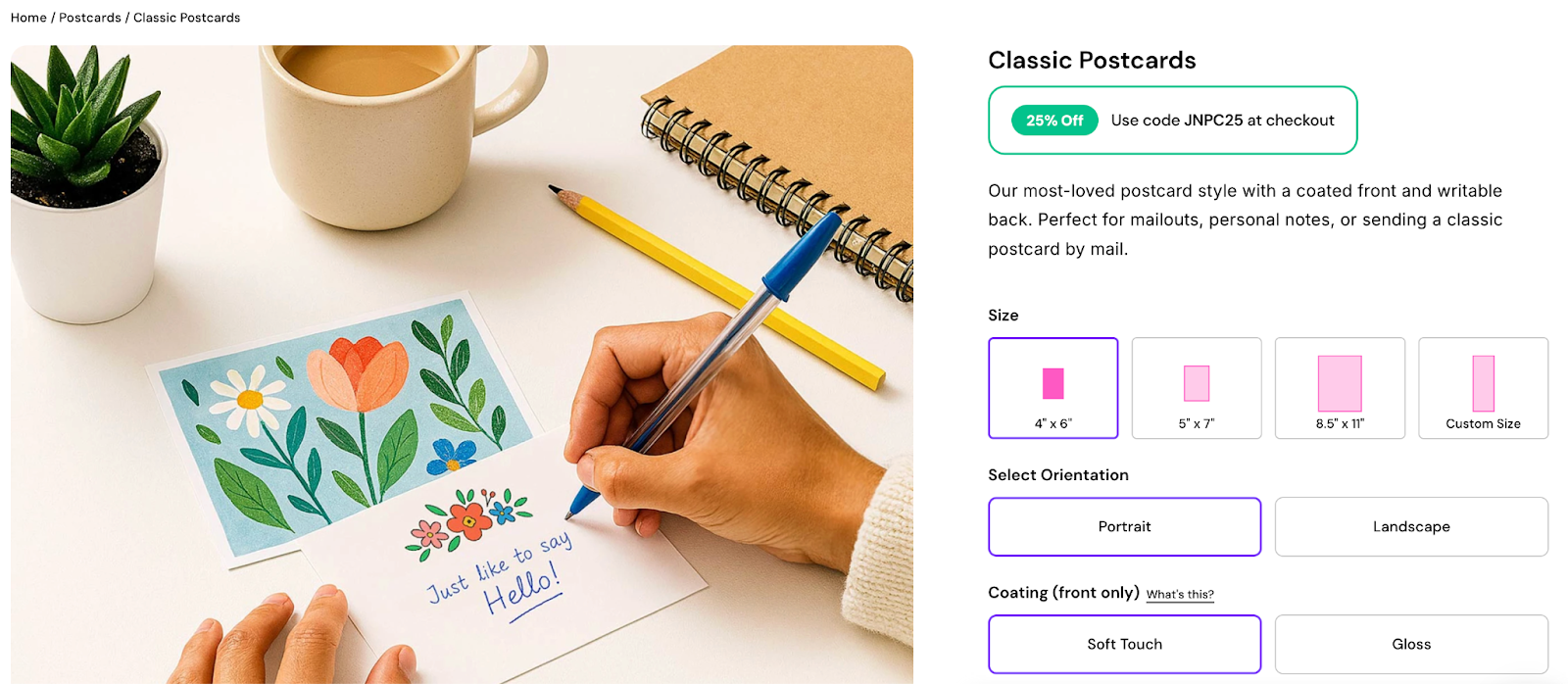
Other Postcard Sizes
- Mini postcards (2.75" x 4.25" or 70 x 108 mm). These are ideal for personal touchpoints, like packaging inserts, thank-you cards, loyalty punch cards, or review and referral reminders.
- Tall/skinny formats (DL-style). Tall, narrow postcards feel more modern and work particularly well for minimalist designs, strong typography, and image-led layouts where the vertical flow helps guide the reader’s eye.
- Jumbo postcards (6” x 11”, 8.5” x 11” or 9” x 12”). These postcards give you a lot of space. Because of this, they’re often used to showcase property in real estate marketing, highlight a limited time offer, or communicate multiple details at once.
Standard Vs Oversized Vs Custom Postcard Sizes
Instead of thinking in terms of individual dimensions, it can help to group postcard sizes into three broad categories. This makes it easier to choose a size based on intent, not just measurements.
| Postcard type | Pros | Cons | Best for |
|---|---|---|---|
| Standard sizes (4” x 6”, 5” x 7”, 6” x 9”) |
|
| High-volume mailers, promotions, events, reliable direct mail campaigns |
| Oversized / jumbo sizes (6” x 11”, 8.5” x 11” or 9” x12”) |
|
| Retail launches, real estate marketing, seasonal or high-impact campaigns |
| Custom (square, tall, unique formats) |
|
| Key brand moments, events, packaging inserts, creative or premium campaigns |
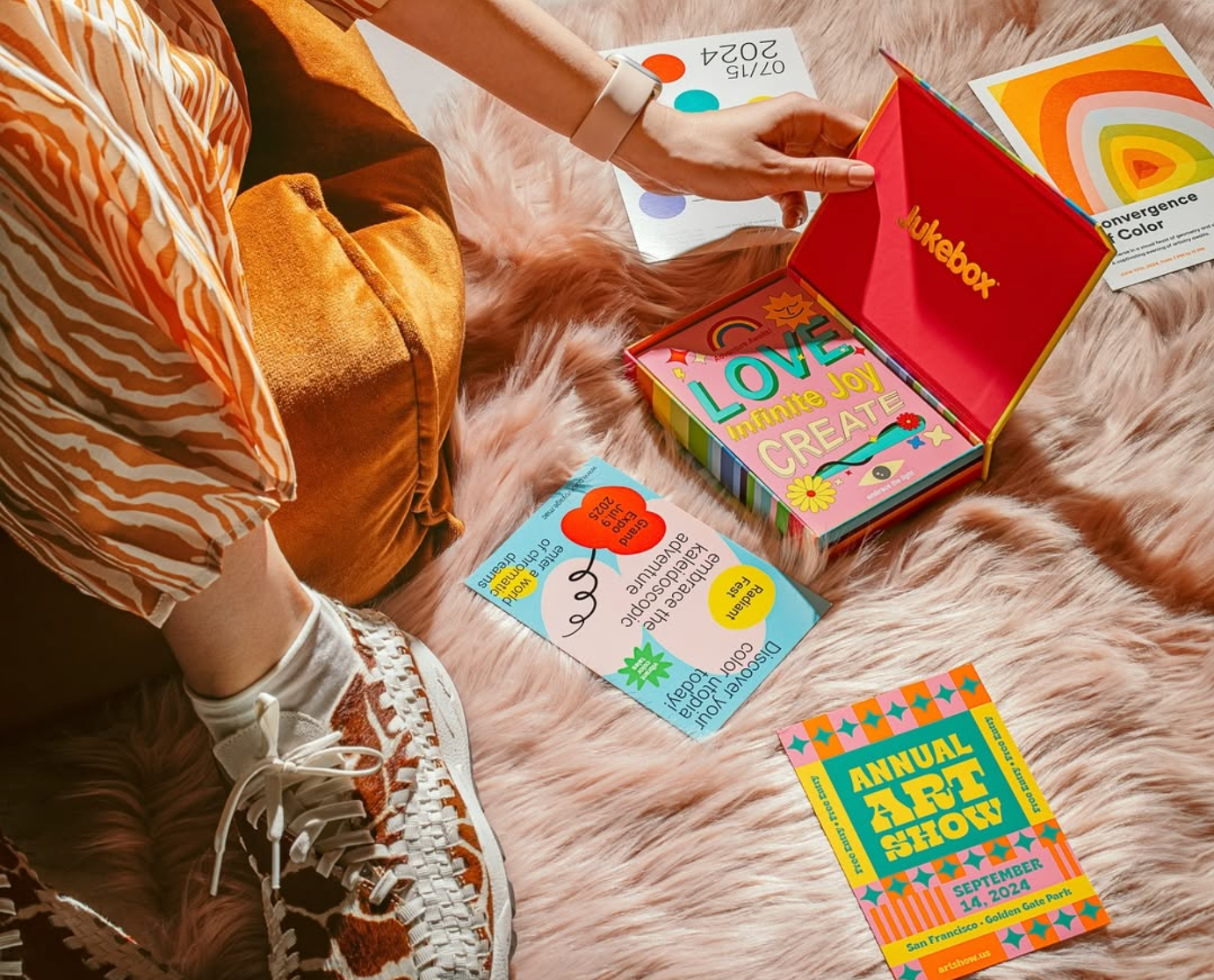
Explore postcard sizes and printing options.
USPS Postcard Size Requirements
- Minimum and maximum dimensions: must be rectangular in shape. Minimum size 3.5” high x 5” long. Maximum size 4.25” high x 6” long. Anything that falls outside of these sizes will be mailed as a letter instead.
- Thickness requirements: minimum thickness 0.007”. Maximum thickness 0.016”. Choosing the right paper stock helps with this.
Note: USPS does not offer a special postcard rate for USPS Marketing Mail. That means larger postcards mailed via Marketing Mail are always priced as letters or flats, even if they feel or look like postcards.
Also note you can be hit with extra fees for adding elements like stickers, samples, and raised textures.
Canada Post Postcard Size Requirements
- Minimum and maximum dimensions: minimum 140mm x 90mm. Standard lettermail allows cards up to 245mm x 156mm.
- Minimum thickness: 0.18mm.
Note: when mailing postcards from Canada to the US or internationally, the maximum allowed size for cards and postcards is 235mm x 120mm.
Also note, you might be charged more for using heavier paper stocks, coatings, or layered designs.
A Quick Guide To Postcard Bleed, Trim, And Safety Zones
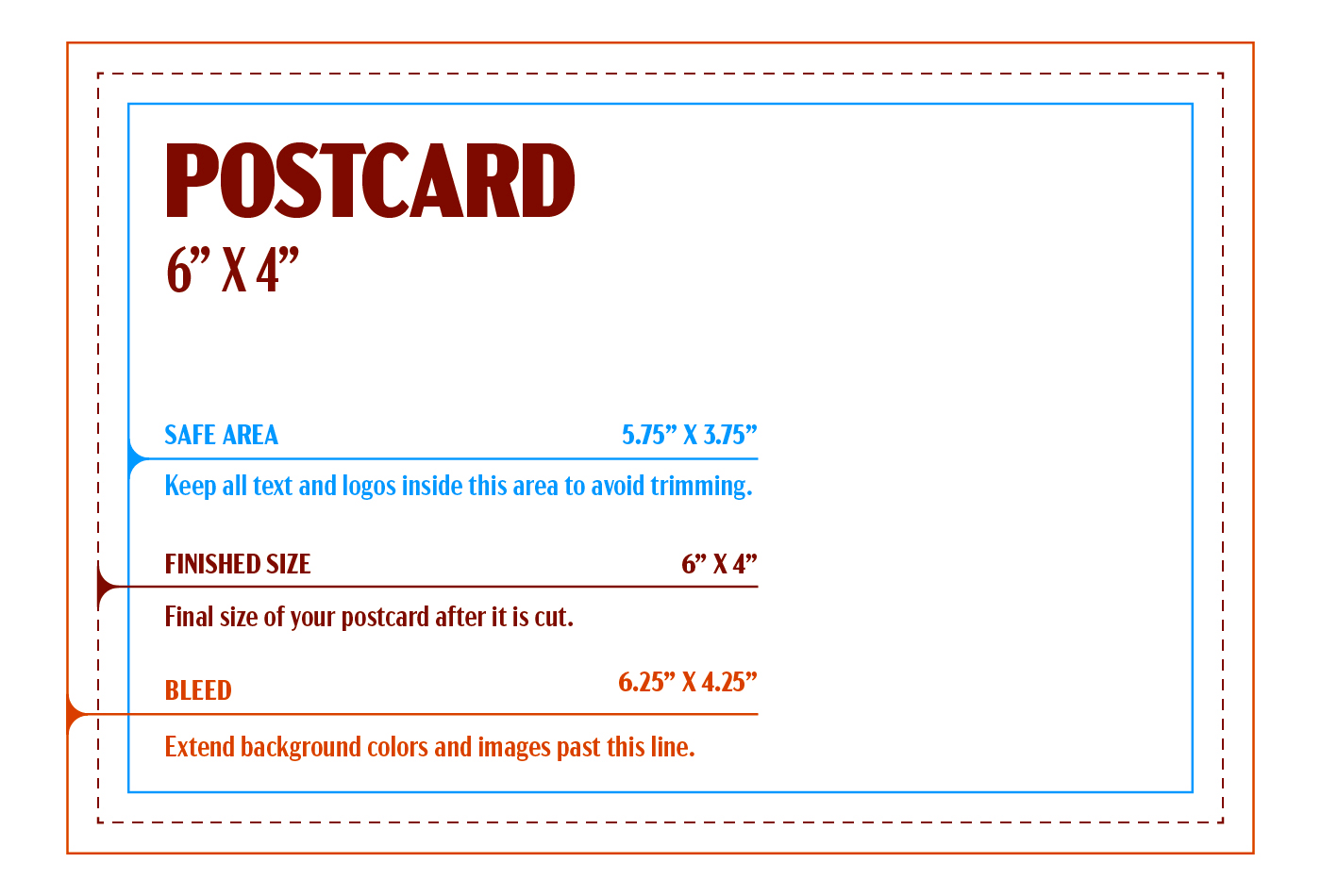
If you’ve ever wondered why a design that looks perfect on screen can come back slightly off in print, it’s usually down to something going wrong with the bleed, trim, or safety zones.
Let’s start with the basics.
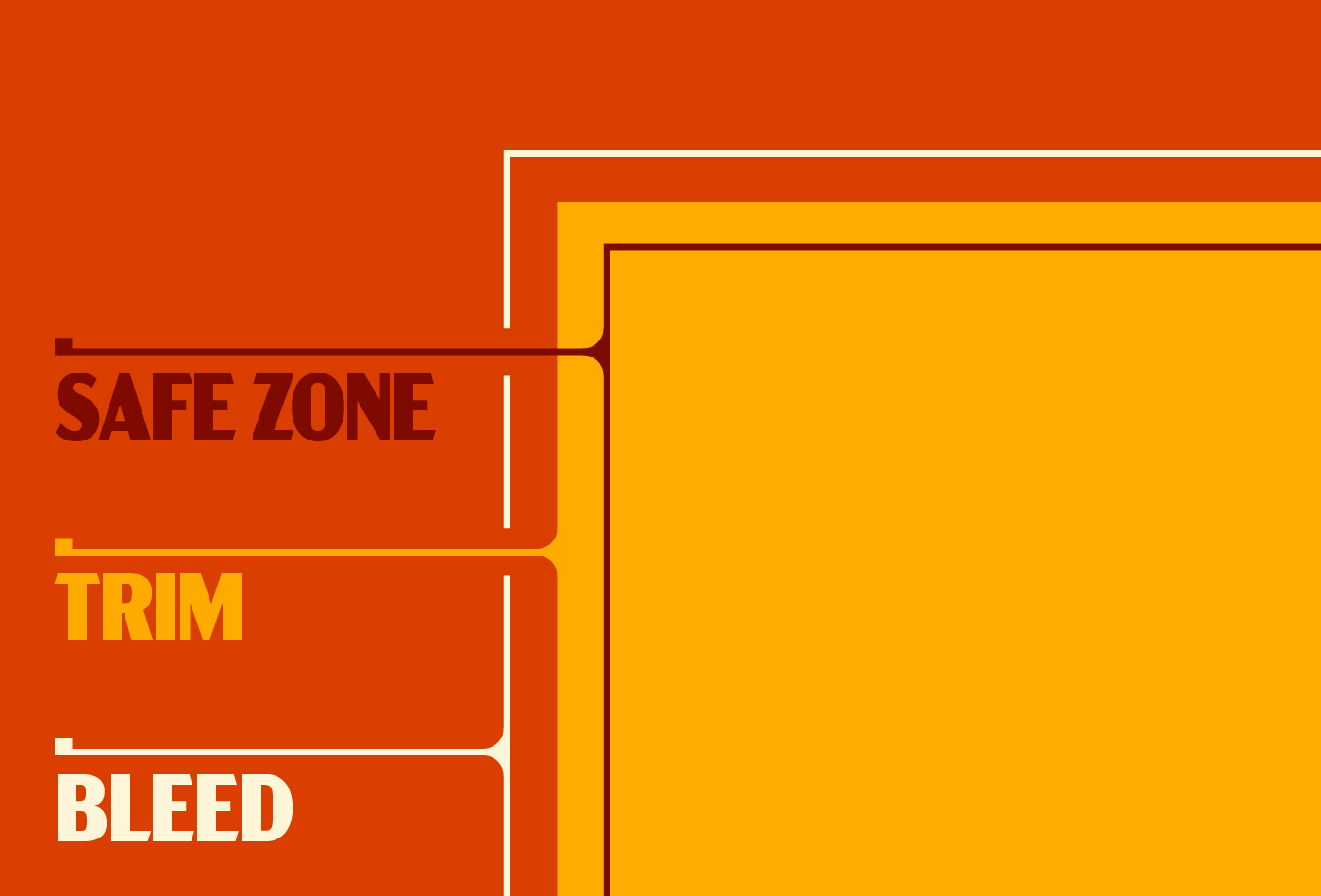
- Bleed is the extra space around the edge of your design that gets trimmed off during printing. It makes sure color, images, or backgrounds go all the way to the edge of the postcard with no white borders. Here’s how online printing services handle the cut.
- Trim line is where the postcard is cut to its final size.
- Safety zone is the inner margin where important content like text, logos, or QR codes should stay to avoid getting cut off.
Recommended Bleed And Safety Rules Of Thumb
While exact specs can vary slightly by product and printer, if you follow these general guidelines you should be safe:
- Bleed: extend your background ⅛” (0.125”) beyond the trim edge on all sides
- Safety zone: keep important content at least ⅛”–¼” inside the trim line
Cutting isn’t perfect to the pixel and tiny shifts can and do happen during trimming.
Larger postcards in particular benefit from more rigorous planning. With more space comes more design freedom, but also more opportunities for things to go wrong if elements sit too close to the edge.
Why Postcard Size Affects Layout Decisions
Different postcard sizes naturally change how your design works.
- Smaller postcards tend to need tighter layouts and less text. Every inch counts, so hierarchy and spacing become even more important.
- Larger postcards give you room to breathe, but they also need stronger structure. Headlines, imagery, and calls to action should still guide the reader’s eye clearly from top to bottom.
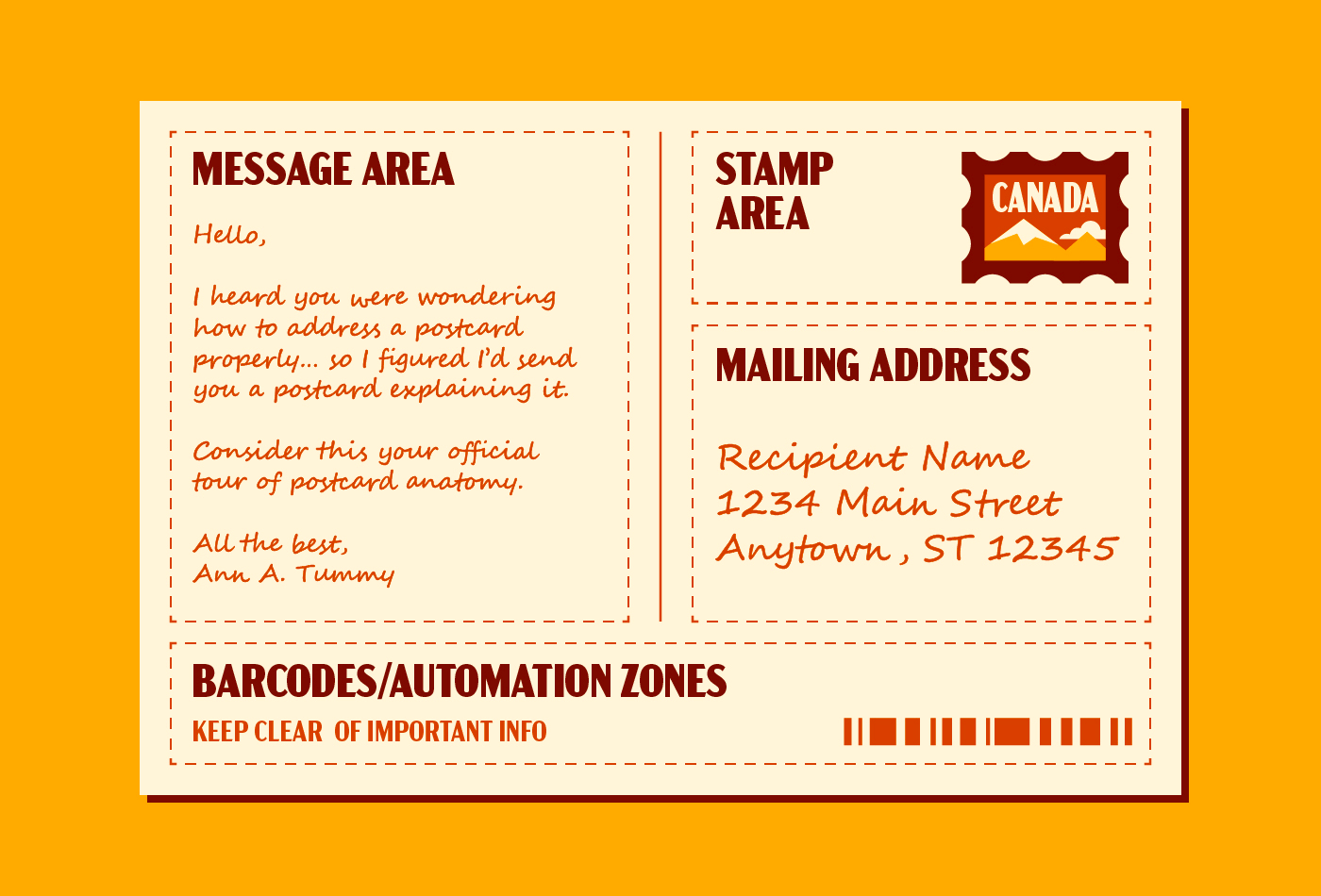
Basic Layout Tips For The Address Side Of Your Postcard
The address side of a postcard is often left as an afterthought, but it has an important job to do.
When designing the address side, plan space for:
- The mailing address block: usually sits on the right-hand side of the postcard and should have plenty of white space around it so it’s easy to read and scan.
- The stamp or indicia area: located in the top-right corner, this space is reserved for postage.
- Postal barcodes or automation zones: this area is typically along the bottom edge of the postcard. Avoid placing important content, logos, or fine details here.
- Message area: the left-hand side is your space for messaging. You can be pretty flexible with this area, but it’s best to keep the layout uncluttered.
Design Tips: Postcard Layout Do’s And Don’ts By Size
Different postcard sizes call for different design approaches. What works beautifully on one format can feel cramped or oddly empty on another.
Use these guidelines to help fill the space you have.
4” x 6” Postcards
| Do | Don't |
|---|---|
|
|
Print 4” × 6” postcards with Jukebox.
5” x 7” Postcards
| Do | Don't |
|---|---|
|
|
6” x 9” Postcards
| Do | Don't |
|---|---|
|
|
6” x 11” Postcards
| Do | Don't |
|---|---|
|
|
Tall or Skinny Formats
| Do | Don't |
|---|---|
|
|
Small or Mini Postcards
| Do | Don't |
|---|---|
|
|
Choosing The Right Postcard Size For What You Need
There’s no single “best” postcard size, only the size that works best for what you’re trying to do. The smartest way to choose is to start with your campaign goal and work backwards from there.
Postcard Size By Campaign Type
- Marketing promotions. If the goal is quick impact, like sales, discounts, limited-time offers, etc, 4” x 6” or 5” x 7” postcards are usually the sweet spot. They’re affordable to mail and perfect for a clear, single call to action.
- Event announcements. For save-the-dates, grand openings, or special events, slightly larger sizes like 5” x 7” or 6” x 9” give you room for details without overwhelming the reader.
- Product launches. Larger formats such as 6” x 9” or 6” x 11” give you enough space to showcase imagery, features, and benefits.
- Thank-you or brand postcards. For thank-you notes, follow-ups, or brand-building touchpoints, smaller or standard sizes work beautifully. A 4” x 6” postcard or mini format keeps things personal.
Choose Based On Goal, Message, And Distribution
Before locking in a size, ask yourself:
- What’s the primary goal of this postcard?
- How much do I really need to say?
- Is there one clear CTA, or multiple steps?
- Will this be mailed, handed out, or included in packaging?
Handouts and inserts give you more freedom to experiment with size and shape. Mailbox campaigns benefit from sizes that let you say what you need without costing the earth to mail.
Choose Based On Budget And Print Efficiency
Many standard postcard sizes are printed using gang-run printing, where multiple jobs share a press run. This keeps costs lower and turnaround times faster. Larger or custom sizes can still be great choices, but they often need a bit more planning and cost more.
The key is deciding where you want to spend: maximum reach, maximum impact, or something in between.
Choose Based On Postal Risk Tolerance
If hitting postcard-rate or standard lettermail pricing is important for you, the safest approach is to design backwards from postal limits. Start with the size that qualifies, then build your layout to fit comfortably within those boundaries.
If you’re open to letter rates or non-standard mail, you have more creative freedom.
2026 Postcard Design Trends
These days, postcards are an experience as well as a way to send a message. With everyone doing everything online, receiving something in the post that looks and feels nice is a lovely little touchpoint.
But it’s still important to stand out. Real life mailboxes are crowded (just like digital ones), and so brands are using shape and format to earn that extra second of attention.
Non-rectangular postcards are showing up more often, especially in lifestyle, retail, and premium brand campaigns.
That said, novelty works best when it’s planned. Here’s what’s trending in postcard design right now so you can see how size and dimensions might influence what you do.
Trend #1: Square Postcards
Square postcards feel modern, which is great for brands that are inherently aesthetic or rely on visual storytelling in any way.
They’re commonly used for:
- Brand announcements
- Product launches
- Event invites
- Packaging inserts
The upside is that square postcards break visual patterns in the mailbox. They’re great for image-led designs, minimal layouts, and strong central focal points.
But from a mailing perspective, square postcards don’t always qualify for postcard-rate pricing. Some postal categories (especially USPS postcard pricing) ask for rectangular shapes with specific proportions. That means square cards often mail at letter rates or require extra planning.
Note: rounded corners are always a nice touch for any postcard.
Trend #2: Creative Die-Cuts
Think arched tops, wavy edges, circles, or custom silhouettes. As you can imagine, these types of postcards are very eye-catching and can often turn a 2D postcard into something tactile and more memorable.
They’re especially popular for handouts and packaging inserts because they feel playful and premium, reinforce your brand personality, and are more likely to be kept or shared.
However. Mailing die-cut postcards can be tricky because the irregular shapes, uneven edges, and thicker stocks can bump up postage costs.
Trend #3: Folded Postcards
While flat postcards are still the norm, folded postcards are gaining traction among brands that want to tell a longer story or share multiple offers over a few panels.
There are two types of folded postcard:
- Half-fold postcards open like a card, giving you two interior panels for content.
- Tri-fold postcards create a mini-brochure feel with multiple sections that unfold in a sequence.
These formats give you more space to play with and an interactive experience, but they also need careful consideration re: printing and postage.
Folded postcards work best when:
- You need to explain something step-by-step
- You’re sharing menus, services, or product collections
- Your campaign benefits from storytelling in some way
Postcard Marketing Ideas That Work At Any Size
Whether you’re working with a small standard postcard or a bold oversized format, the ideas below can be adapted to fit almost any layout or budget.
Think of these as flexible frameworks you can scale up or down depending on your goals.
- Voucher and loyalty cards. A simple offer, clear expiration date, and strong call to action can turn a single postcard into repeat business. Smaller sizes work well for ongoing loyalty programs, while larger formats are great for limited-time or high-value offers.
- Appointment reminders and follow-ups. Postcards make excellent appointment reminders, especially for service-based businesses. They feel more personal than email and are harder to ignore. Keep the message short, include key details, and pair it with a QR code or URL so it’s easy to confirm or reschedule.
- Promotions and special offers. Sales, seasonal promotions, and flash offers are classic postcard use cases for a reason. No matter the size, focus on one main offer and make the next step obvious.
- Event announcements. Slightly larger sizes give you room for dates, locations, and visuals, but even standard formats can work beautifully when the message is focused and well-designed.
- Package inserts and review requests. Thank-you notes, care tips, referral incentives, or review requests all work well in smaller formats. These postcards feel intentional and often get kept longer than expected.
- Brand story and education pieces. Not every postcard needs to sell. Some of the most effective campaigns focus on brand storytelling, education, or values. These work especially well when paired with clean layouts and thoughtful messaging that invites the reader to learn more.
- Re-engagement campaigns. Postcards are great for reconnecting with past customers. A friendly check-in, “we miss you” message, or gentle nudge back to your brand can feel really personal, especially when it’s not tied to a hard sell.
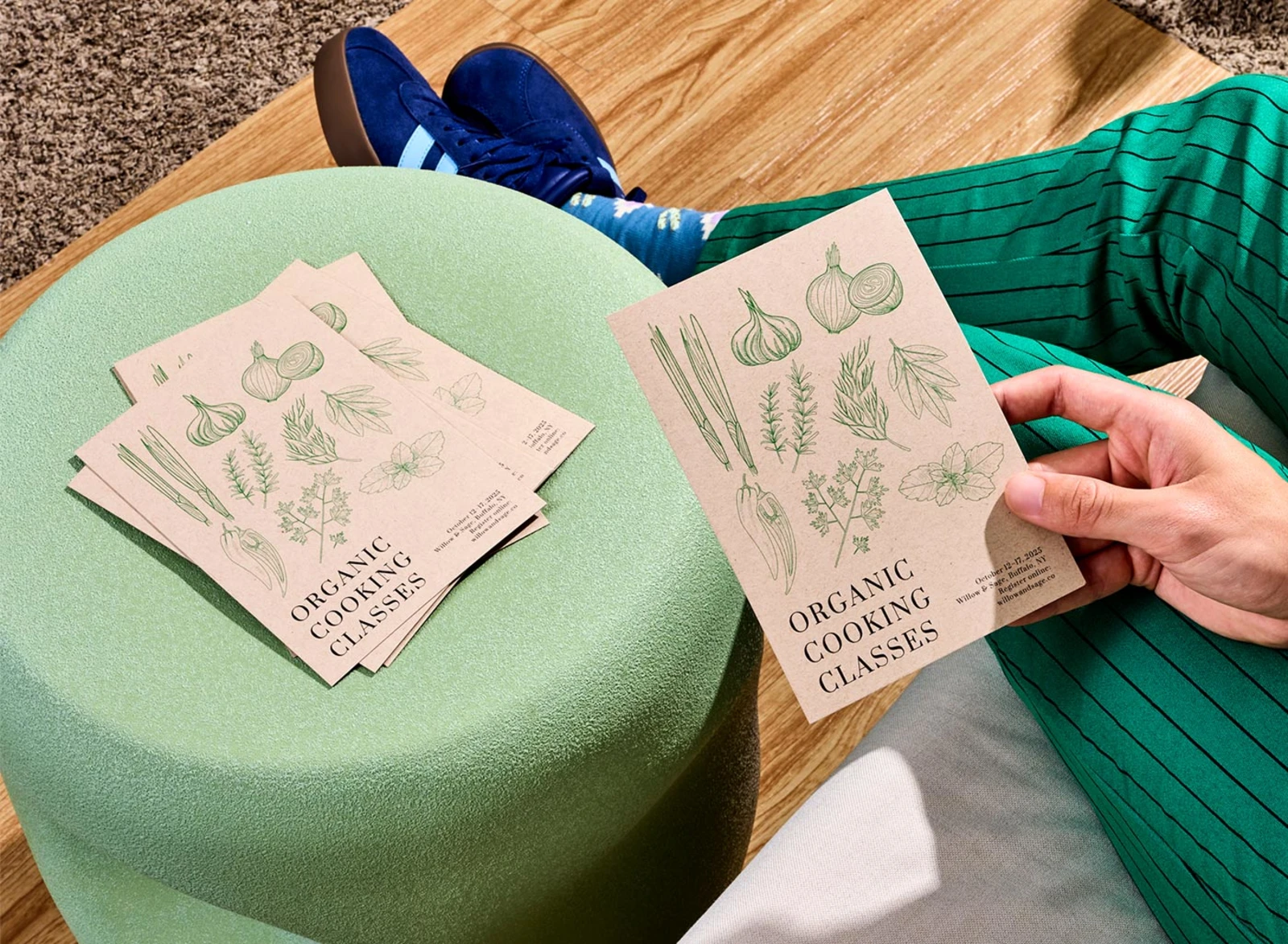
Eureka Art Studio created a series of postcards to promote their illustrations.
Common Postcard Size Mistakes (And How To Avoid Them)
Here are the most common postcard size missteps we see, and how to steer clear of them.
Mistake #1: Designing Before You Know What Postage You Need
It’s tempting to design first and worry about mailing later, but size and postage are closely connected. A design that looks perfect can suddenly become more expensive to mail if it falls just outside postcard-rate or standard lettermail limits.
How to avoid it: decide how you plan to mail your postcard before you design it. Start with a size that fits your postage goals, then build your layout around those boundaries.
Mistake #2: Ignoring Bleed, Trim, And Safety Zones
Skipping bleed or placing important elements too close to the edge can lead to white borders, cropped text, or awkward-looking trims. These are small details that make a big difference in how professional your postcard looks.
How to avoid it: always include bleed in your design and keep logos, text, and QR codes safely inside the trim line. When in doubt, give your content more breathing room.
Mistake #3: Choosing Size Based On Looks Alone
Bigger or more unique postcards can be eye-catching but they’re not always the best fit for your message or budget. Choosing a size just because it “looks cool” can be more expensive and be overly complex for what you need.
How to avoid it: let your campaign goal lead the decision. Match size to message rather than the other way around.
Mistake #4: Forgetting To Stay Compliant
A postcard that mails perfectly within one country may not meet size limits when sent internationally. This often catches brands off guard, especially when mailing from Canada to the US or overseas.
How to avoid it: if your postcard is crossing borders, double-check international size requirements before finalizing your design.
Mistake #5: Adding Attachments Without Knowing The Cost
Stickers, magnets, samples, or layered elements can push a postcard into non-standard categories or even make it non-mailable.
How to avoid it: if you want to add extras (which can work really well), plan for them early and confirm how they’ll affect postage and processing.
Mistake #6: Overloading The Design On Your Chosen Size
Trying to squeeze too much content onto a postcard (especially mini postcards) can make it hard to read and easy to ignore.
How to avoid it: focus on one clear message and one primary call to action.
When You’re Ready To Print…
Whether you’re mailing high-volume promotions, launching a product, or adding a thoughtful touchpoint to your packaging, the right postcard size makes things like design, printing, postage, and delivery much easier.
If you want a safe, cost-effective starting point, 4” x 6” is hard to beat.
If you’re aiming for more visual impact or storytelling space, larger formats can be well worth it. And when you really want to stand out, custom sizes and finishes give you the freedom to create something memorable.
Ready to take the next step? Explore all postcard sizes available at Jukebox.
Not sure which stock to pair with your size? Here's everything to know about postcard stocks.
Postcard Size And Dimensions FAQ
What Is The Standard Postcard Size?
The most common standard postcard size in the US and Canada is 4” x 6”. It’s widely used because it’s easy to design for, cost-effective to print, and qualifies for standard postcard postage.
What Postcard Sizes Qualify For Usps Postcard Pricing?
To qualify for USPS postcard pricing, postcards must be rectangular and measure between 3.5” x 5” and 4.25” x 6”, with a thickness between 0.007” and 0.016”. Anything outside these limits is mailed at letter rate.
What Are The Minimum Postcard Dimensions For Canada Post?
Canada Post requires postcards to be at least 140 mm x 90 mm and 0.18 mm thick. Cards smaller or thinner than this may be rejected or charged as non-standard mail.
Can I Mail A 5” × 7” Postcard With Postcard Postage?
No. A 5” x 7” postcard is too large for postcard pricing and will be mailed at letter rate with USPS and Canada Post. It’s a popular size for design impact, but it does come with higher postage.
What Size Postcard Is Best For Direct Mail Marketing?
For most direct mail campaigns, 4” x 6” is the most efficient choice, balancing cost and reach. If you want more visual impact or room for messaging, 5” x 7” or 6” x 9” postcards are also strong options.
What’s The Best Postcard Size For Packaging Inserts?
Smaller formats like 4” x 6” or mini postcards work best for packaging inserts. They’re easy to include with orders and feel intentional without overwhelming the customer.
Do Square Postcards Cost More To Mail?
Often, yes. Square postcards don’t always qualify for USPS postcard pricing because they don’t meet rectangular aspect ratio requirements. They typically mail at letter rate or higher, depending on size and destination.
What’s Bleed And How Much Do I Need?
Bleed is extra artwork that extends beyond the final trim edge to prevent white borders. Most postcards require ⅛” (0.125”) of bleed on all sides for clean, edge-to-edge printing.
How Thick Should A Postcard Be For Mailing?
Postcards need to be thick enough to move smoothly through mail processing equipment without bending or tearing.
For USPS postcard rates, the thickness must be between 0.007″ and 0.016″, which equals approximately 5pt to 16pt. Postcards thicker than 16pt, such as 20pt (0.020″), are typically processed and priced as a letter rather than at postcard rate.
For Canada Post, the minimum thickness is 0.18 mm, which equals approximately 7pt. Thicker stocks like 20pt are generally acceptable, though postage classification may vary depending on size and weight.
For brands mailing 4x6 or 5x7 postcards in 2026, many choose 14pt to 20pt for a sturdier, more premium feel in the mailbox.