Postcards are small but full of personality. They travel, they surprise, and they make design feel tangible. From a tiny thank-you to bold mini-poster energy, there’s a postcard size for every idea.
This guide is your quick path to the right fit. We’ll cover the most popular postcard sizes and postcard dimensions, when to choose each one, and simple tips to keep printing and mailing smooth. You’ll see why the 4" x 6" classic still wins for cost and convenience, plus a few creative formats that bring extra flair. Ready to pick a size that matches your message? Let’s jump in.
What size is a postcard?
If you’ve ever wondered what size a postcard should be, you’re not alone, and our guide will give you the clearest answer. While there isn’t one single postcard size that fits every project, some dimensions have stood the test of time.
The size you choose often depends on your design, your message, and how you plan to use it. Smaller postcards are great for quick notes or inserts, while larger ones make a bigger visual impression. When it comes to printing and mailing, a few key sizes have become the industry standard, and that’s where we’ll start.
History of Postcard Sizes
A 1909 postcard from Toledo, Ohio
Postcards first appeared in the late 19th century as a lightweight, affordable way to send short messages without envelopes, as described on Wikipedia. In 1878, the Universal Postal Union established an international standard of 3.5" x 5.5" (89 mm × 140 mm) which many countries adopted.
As printing and photography advanced, designs became more detailed and expressive. The early 1900s marked the “golden age” of postcards, when hand-colored scenes and real photo prints were collected and mailed around the world, as noted in the History of Postcards in the United States.
Over time, layouts evolved to include both imagery and space for messages, leading to the modern 4" x 6" format that balanced creativity with postal convenience. Archives like the College of Saint Benedict & Saint John’s University collection trace this evolution through decades of design and regulation.
Why is 4" x 6" the standard postcard size for businesses?
The 4" x 6" postcard (102 mm × 152 mm) is the size most people recognize. It’s compact, easy to handle, and qualifies for the lowest postage rates through Canada Post and USPS. That makes it both affordable and practical for marketing campaigns, thank-you notes, and everyday mailers.
Why it’s so popular:
Meets postal regulations for the best mailing rate
Fits easily into racks, envelopes, and packaging
Gives enough room for bold imagery and short messages
If you’re looking for versatility and value, this is the postcard size that does it all.
Postcard Size Chart
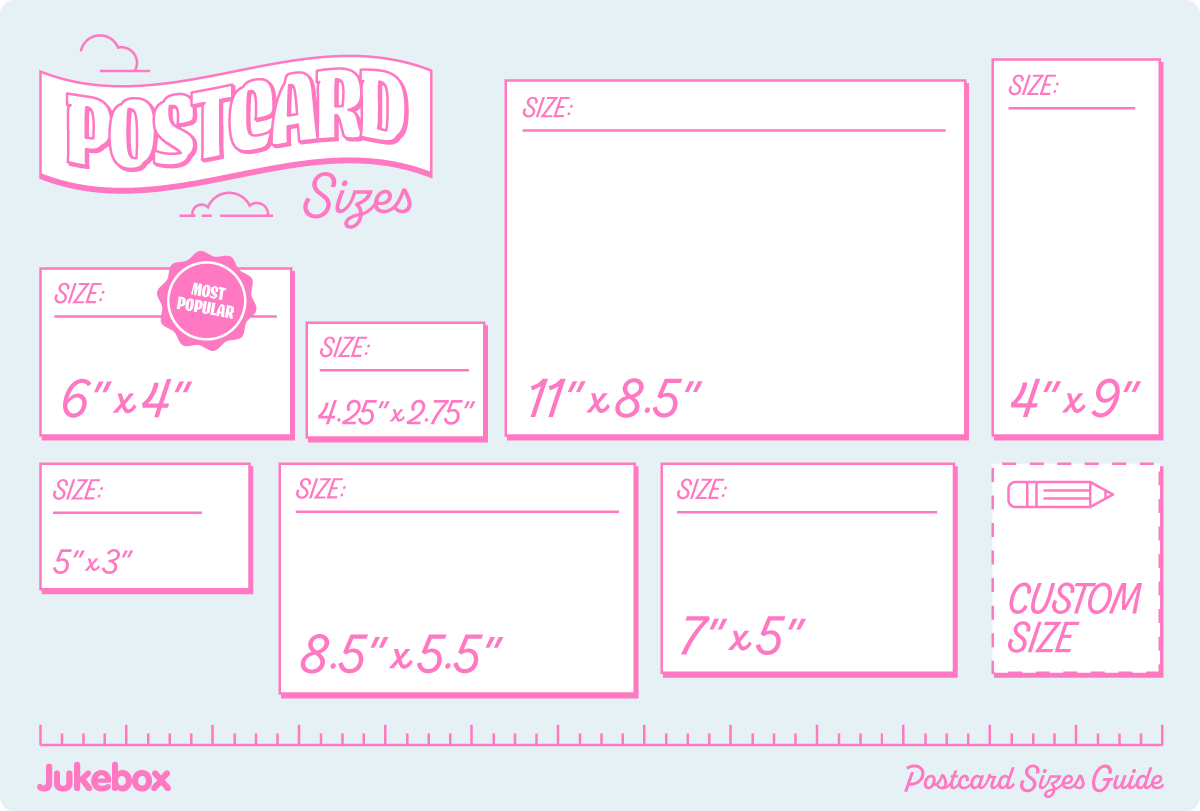
Here’s a quick overview of the most popular postcard dimensions, from small, attention-grabbing cards to larger promotional formats.
Size
Inches
Millimeters
Ideal Use
Mini Postcard
2.75" × 4.25"
70 × 108 mm
Small inserts, loyalty cards
Standard 4" × 6" Most Popular
4" × 6"
102 × 152 mm
Mailers, promotions
Medium
5" × 7"
127 × 178 mm
Invitations, announcements
Half Page
5.5" × 8.5"
140 × 216 mm
Menus, showcase designs
Large
6" × 9"
152 × 229 mm
Retail and event mailers
Jumbo
6" × 11"
152 × 279 mm
High-impact marketing pieces
Trends in Postcard Design (2025)
Rounded corners are one of this year’s most popular design choices, offering a soft, polished look that feels modern and refined. They work well for creative brands and retail marketing where presentation matters.
Painted edges are also making waves, adding a pop of color that looks great stacked, displayed, or handed out in person. It’s a simple detail that makes your postcards stand out.
Classic Postcards: The Timeless Choice
For those who love traditional printing, Classic Postcards remain a favorite. The front comes coated for rich color, while the back is uncoated and easy to write on. It’s the original postcard style that still delivers on quality and feel.
Custom Postcards: Creative Shapes for 2025
Postcards don’t have to stay rectangular. Custom-shaped postcards are one of the fastest-growing print trends for 2025, giving brands the freedom to turn any concept into a collectible piece of design.
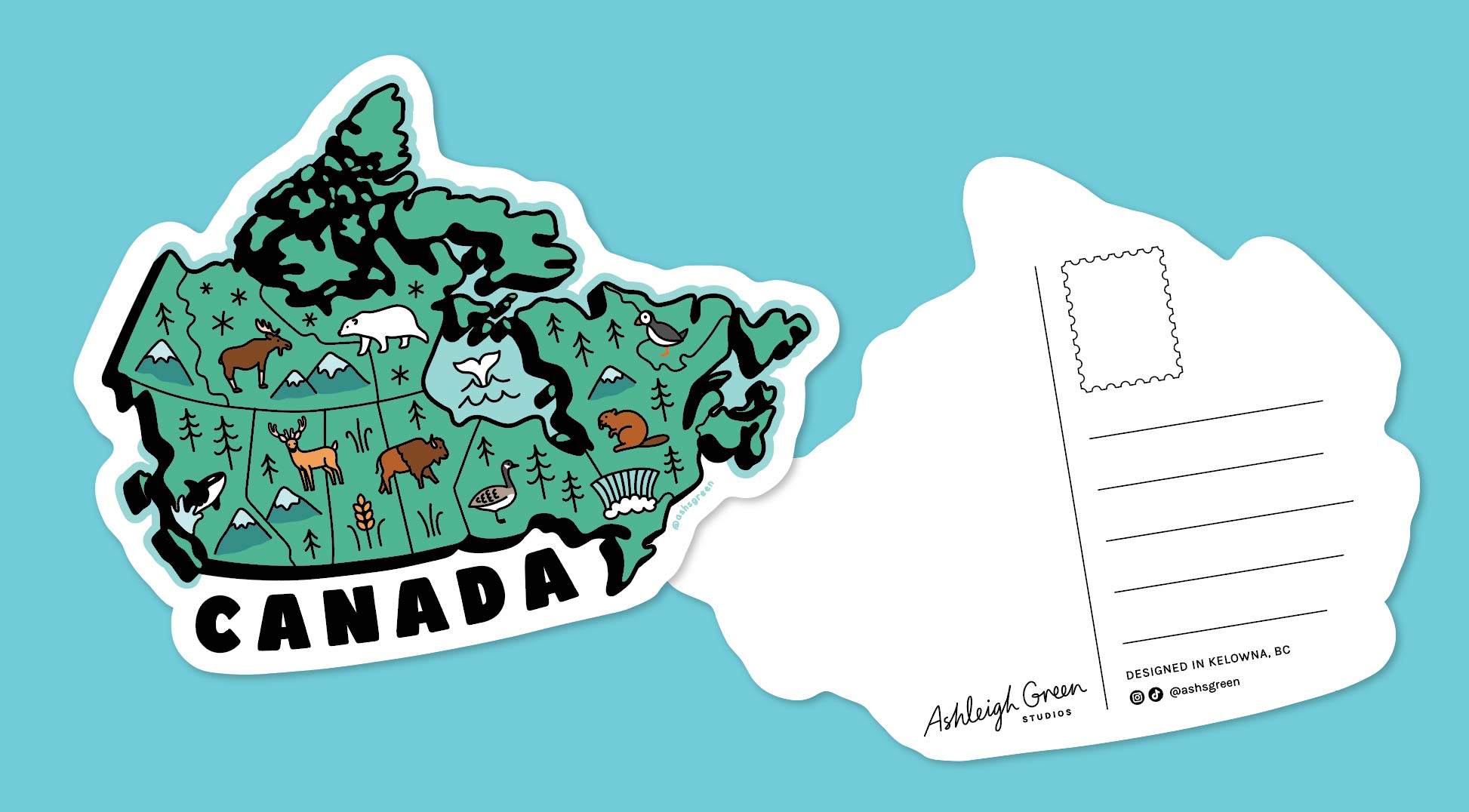
Design by Ashleigh Green Design Studios
The example above shows how a die-cut postcard shaped like Canada turns a design into something worth keeping. Illustrated on the front and writable on the back, it’s both a keepsake and a creative form of communication.
Custom shapes can be printed on all our premium stocks and finishes, including matte, gloss, and soft-touch coatings. They’re perfect for:
The 4" x 6" postcard continues to be the gold standard for print and mail. It’s compact, easy to design, and balanced for text and visuals. Rounded corners, painted edges, and custom die-cut shapes are defining the next generation of postcard design, while classic coated fronts with writable backs remain a timeless favorite.
Whether you keep it traditional or go bold with something new, postcards are still one of the most creative ways to share your message in print.
FAQs About Postcard Sizes
What is the standard postcard size? The most common postcard size is 4" x 6". It’s cost-effective, postal-friendly, and ideal for both personal and business use.
Can postcards be different shapes? Yes. Die-cut postcards can be made in almost any custom shape, allowing you to create something completely unique for your brand or design.
What’s the best postcard size for mailing? A 4" x 6" postcard qualifies for the lowest mailing rate through Canada Post and USPS, making it the most practical choice for bulk mailers.
Can I write on the back of glossy postcards? Our Classic Postcards are designed with a coated front and an uncoated back, so you can easily write messages without smudging.
Business cards are a great way to make an impression with potential customers, but how do you know you’re creating the right impression? Read on for our guide…
Even though many believe they are outdated, postcards have stood the test of time and keep finding their way into mailboxes worldwide. Not sure exactly how to address a postcard? Well, Jukebox is here to help! In just 6 easy-to-follow steps, you’ll learn how to properly address a postcard.

 Canadian Dollar (CAD)
 US Dollar (USD)
 Euro (EUR)